AI Product Photography vs Photographer: Cost, Time and 3 Quality Checks
AI product photography vs a photographer, compared on what matters: whether your real product survives. 3 checks to judge any image. Get one image free.

Most AI product photos look cheap because they were made to be cheap.
We build AI product imagery for luxury brands every month, so we see the complaints up close. In the AI product photography vs photographer debate, the critics are right about the output. They’re wrong about the cause. A photographer records your product. A fully generated image invents one. That gap decides everything else.
The one real difference: a photo records, AI invents
Start with what the critics see, because it’s real. Most AI product images in your feed were typed, made once and posted. Nobody wrote a brief. Nobody held the result up next to the real piece.
A photographer with no brief and no time does the same thing: a correct, lifeless photo of a product nobody wants. The tool isn’t what went wrong. The missing brief is.
A camera records what is in front of the lens. The engraving, the number of stones, the exact shade of the leather.
Fully AI-generated product images work differently. They make something that looks like your product, built from the average of everything the model has seen.
A camera copies your product. A fully generated image guesses it.
On a mug, the guess may be close enough. On a ring with a special setting, it’s a different ring. The more a buyer pays for a detail, the less a guess at that detail is worth.
So the question isn’t AI or a camera. It’s whether the product in the frame is the one you sell. You can judge ours against the real pieces in our work.
AI vs photographer vs real product in a built scene
Most comparisons stop at 2 options: AI or a photographer. There are 3, and the third one is how we work.
A fully generated image fails the first test: is this the product you sell? That leaves the 2 options that use your real product.
| Photo shoot | Built scene | |
|---|---|---|
| People in the photo | Casting, travel and a booked day on set | Added around your real piece |
| Sizes for each platform | Shot or cropped one at a time | Same product and light, set up for each size |
| A new launch | Waits for stock, a studio and a date | Starts from a phone photo, the week it’s ready |
| Time to finished images | Days to weeks: booking, the shoot, then editing | First image in under 48 hours |
| What you send | The product itself | 1 product photo + 4 brand reference images |
Both use your real product. Only one can build a scene you couldn’t book.
Cost and time compared
Shopify’s staff writers put product photographers at 500 to 3,000 dollars a day in a January 2026 pricing guide. Per image, they put it at 50 to 350 dollars, with outliers on both sides.
That is the photographer’s fee. A shoot costs more than the fee. Each launch can add:
- a studio
- models and styling
- travel
- retouching
- a reshoot when something gets missed, which means booking the day again
Time works the same way. Booking, the shoot day and editing all come before the first finished image. Need it sooner, and the same guide says rush fees run 25% to 200% of the total job cost.
We don’t list prices in posts, because every plan is built for one brand. What we can say: you send one product photo, and the first image comes back in under 48 hours. We can build one image for you at no cost.
Where AI product images go wrong, and the check for each
You don’t need to know how an image was made to judge it. The same 3 problems show up again and again, and each takes 10 seconds to check.
| Failure | What you see |
|---|---|
| The product drifts | Prongs multiply, a clasp changes shape, a logo turns into letters that aren’t quite a word |
| The light has no source | Everything is evenly bright, and no shadow points one way |
| The detail runs out | The piece goes soft or strange as you zoom in |
The 3 checks, one per failure:
- Hold the real piece next to the screen. Every detail should match: the number of stones, the shape of the clasp, the spacing of the logo.
- Point to the main light. If you can’t, nobody decided where it comes from. Real light leaves a shadow that agrees with it, on the product and on the surface under it. The eye notices even when the viewer doesn’t.
- Zoom to the clasp or the stitching. A real photo keeps its detail as you zoom in. A generated product falls apart right where a careful buyer looks.
Run check 1 now. Put your best-selling piece next to your laptop and open its product page. If anything about the piece changed, the image shows a different item with your name on it. Then do it on your phone, at the size a buyer sees.
If a check fails, name the exact detail and send the image back. A note like “the clasp has 3 links, not 4” gets fixed. “Something looks off” doesn’t.
Buyers rarely name any of this. They feel something slightly off and keep scrolling. That pause never shows up in a dashboard.
The third option: real capture, built scene, hand check
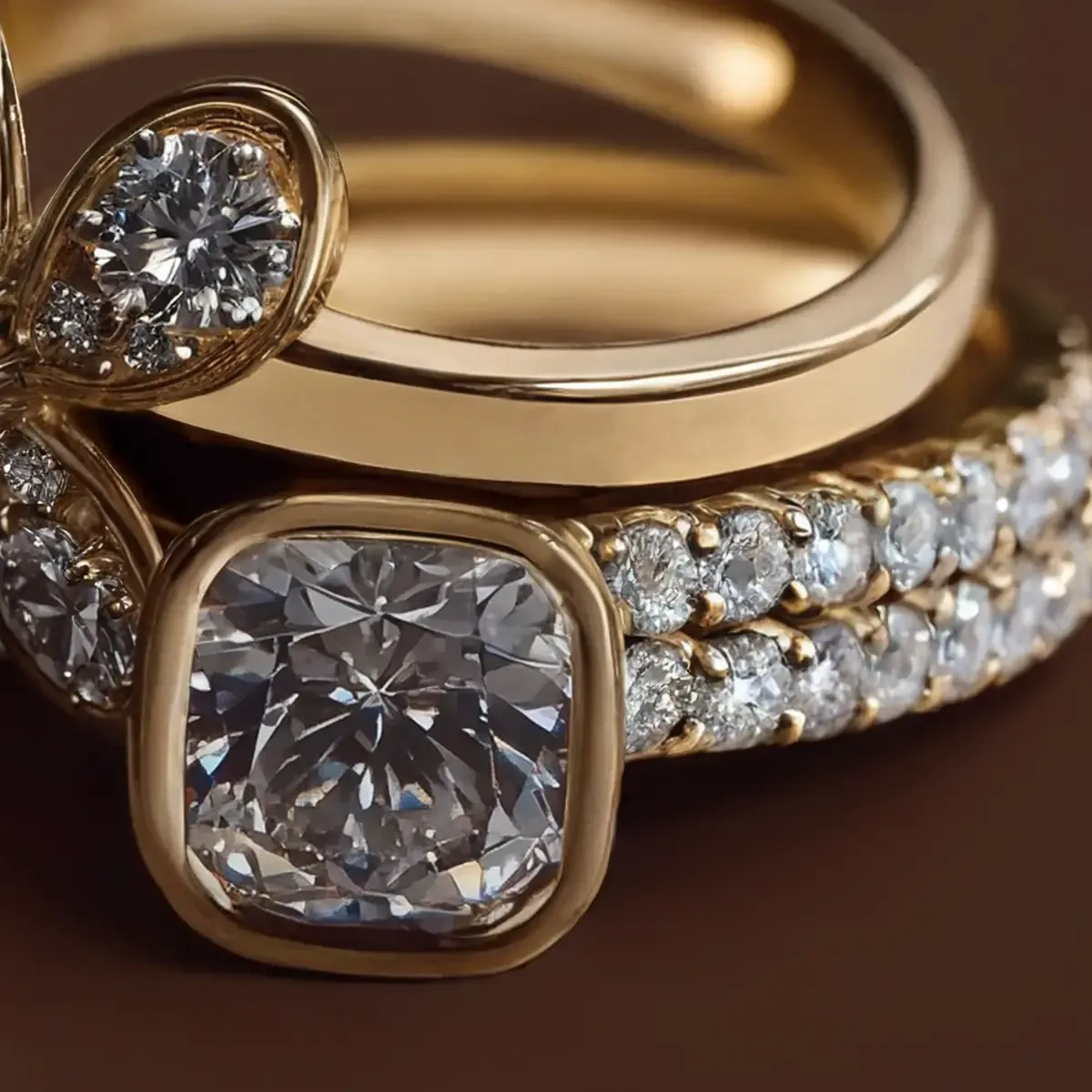
The product is photographed for real. Often that’s a phone shot from the brand’s own studio. Each product comes back as 4 matched angles.
AI then builds the body, the light and the setting around it. A shoot needs the location, the season and the time of day to line up on one booked day. Built around a real photo, the scene can be whatever the brief asks for.
A person checks every image by hand, against the original, so nothing about the product changed. Original on one side, finished image on the other, detail by detail. It is slow on purpose.
The product is never generated.
Keeping the product real doesn’t make the image right by itself. The light in the scene has to match the light on the product. A ring lit from the left can’t sit in a room lit from the right. A shiny watch case shot under a window can’t sit in candlelight without the reflections giving it away.
When the two don’t match, the image goes back. That’s the least exciting part of the job, and the part that decides what ships.
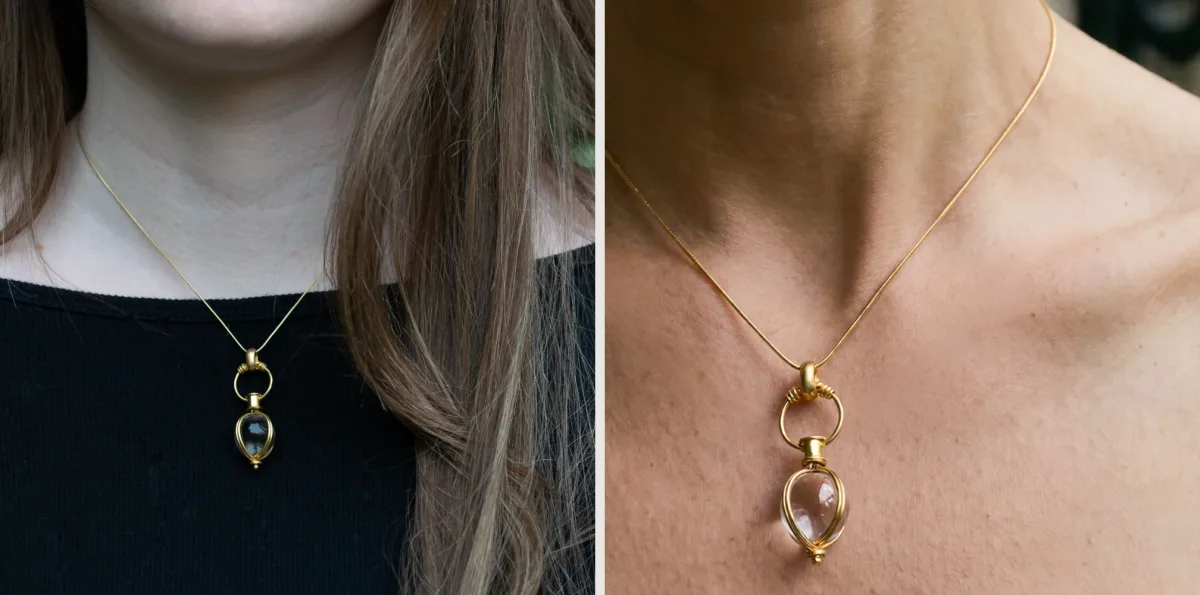
When it holds, the people closest to the brand can’t tell. Polly Gasston photographed her own jewelry on her own camera. Her website and IT person didn’t believe the finished images were AI. Neither did her brother. Read the full case.
Which one to choose
Each option has a job it does best.
- Choose a photographer when the product moves on set: fabric in wind, liquid being poured, a real person in a real room on video. Also when nobody has photographed the product yet. Every image we make starts from a real photo, and someone has to take it.
- Choose a fully generated image only when accuracy doesn’t matter yet: a mood board, or an idea before the product exists. Never for the product page.
- Choose a real product in a built scene when you need the actual piece in scenes you couldn’t book, every month, in one look.
You will often want 2 of them: a camera for the product photo and anything that moves, built scenes for everything around the product. One thing stays a camera’s job every time. A portrait of the founder should be that person, photographed.
How to brief AI product imagery
A brief is what separates a directed image from a generated one. It answers the questions a model will otherwise answer for you, badly. It fits on one page.
- Where will the image live? A product page, a story and a billboard need different crops and different amounts of space.
- Who is it for? One person, in one line. Not an age range. The scene, the model and the mood all follow from that line.
- Where is the light coming from? One direction, decided before anything is made.
- What must never change? The engraving, the stone, the color of the strap. If it isn’t sharp in your photo, nobody can show it honestly. Even light, in focus front to back, nothing cut off.
- What does it feel like? A few reference images, not adjectives.
- What already works? Your best-selling image, and one line on why you think it sells.
Then expect to refuse the first result. A brief doesn’t remove the second look. It makes the second look worth having.
Disclosure: what Google expects
Since February 2024, Google Merchant Center requires merchants to keep the metadata that marks an image as AI-generated, as Google’s help page on the metadata rule and an IPTC note from the same month explain. The tag is the IPTC value trainedAlgorithmicMedia, so check that your editing and export settings don’t strip it. Keep the tag, and say how the scene was made when anyone asks, the way our FAQ does.
A capture, a brief, references, a refused first result and a hand check against the real piece: that’s what a directed image takes. A shoot covers one launch. One product photo can feed a month of images. Send one, a phone shot is fine. It stays exactly yours, and we build the scene around it. We can build one image for you at no cost.
Hypervision. The product stays real.
Questions people ask
Is AI replacing photographers?
Not the ones who direct. What is being replaced is the product photo nobody briefed: one setup, first result, posted. Deciding the light, the scene and when a shot isn't good enough is still the job.
Is product photography dead?
No. The generic catalog photo is fading. Images that show the real product accurately, in a setting with an idea behind it, are still the hard part, whoever makes them.
Which AI is best for product photography?
The tool is the least important choice. The same model makes a convincing campaign image or an obvious fake, depending on the brief that goes in and who checks what comes out.
Do customers care if product photos are AI?
They care whether what arrives matches what they saw. A real product in a built scene passes that test. A generated product can fail it, however good it looks.
How much does AI product photography cost compared to a photographer?
Shopify's January 2026 pricing guide puts product photographers at 500 to 3,000 dollars a day, or 50 to 350 dollars per image, before the studio, models and editing. We don't list prices in posts. You send one product photo, the first image comes back in under 48 hours, and we can build one image for you at no cost.